
Tag: kindergarten

  • The 4th Annual Art Walk: A Celebration of Play, Process, and Community

    The 4th Annual Art Walk: A Celebration of Play, Process, and Community

    From April 23–27, 2026, Kids at the Creek Preschool will host our 4th Annual Art Walk, a week-long celebration of creativity in action.

    Each spring, our classrooms open their doors to families for this special tradition — an opportunity to step into the world of childhood imagination, exploration, and expression. The Art Walk is more than an exhibit; it is a reflection of the learning that unfolds every day
    inside our play-based preschool community.

    A Growing Tradition
    What began four years ago as a small celebration of classroom creativity has grown into a meaningful school-wide tradition that brings our entire community together.
    The Art Walk reflects who we are as a play-based, process art preschool. Throughout the year, children engage in open-ended art experiences that invite them to explore materials, test ideas, make decisions, and express themselves freely. You will not see rows of identical crafts. Instead, you will see individuality, experimentation, collaboration, and joy.
    As a play-based preschool, we believe children learn best when they are actively engaged — building, imagining, painting, constructing, questioning, and discovering. Through creative exploration, children strengthen fine motor skills, develop flexible thinking, build confidence, practice problem-solving, and learn to collaborate with others. They discover that their ideas matter.

    The pieces displayed during the Art Walk represent the many small moments of exploration that happen daily in our classrooms.


    What Families Will Experience
    During Art Walk week, families will visit their child’s classroom on their teacher’s assigned day to view individual artwork and student-created sculptures.

    In the lobby, each class will showcase a collaborative piece — large-scale works that reflect shared creativity, teamwork, and collective decision-making. Students will also tour the exhibit with their teachers during class time, allowing them to observe, reflect, and take pride in their contributions.

    Community Reflections
    This year, our lobby will include a special interactive element. Birch trees will invite families to leave notes of encouragement for our young artists.
    Parents are welcome to take their time — perhaps enjoying a coffee from our café — as they walk through the displays and reflect on the creativity they see.

    When children witness their work being valued by their families and community, something powerful happens: their confidence grows.
    The Art Walk is a reminder that childhood creativity is not about perfect products. It is about courage, curiosity, and connection.
    We are grateful to continue this growing tradition for the fourth year and look forward to celebrating with our families once again.


    By Monika LeMoine > Teacher, KATC
    About the Author > Monika LeMoine is a Preschool teacher at Kids at the Creek (KATC), where she has been inspiring young learners for the past five years. Beyond the KATC classrooms, Monika serves as an art docent at the local elementary school, fostering a deep appreciation for creativity in the community’s children. She is a dedicated advocate for process art, believing firmly in its power to bolster social and emotional development. Monika is passionate about providing children the freedom to experiment and explore, teaching them that in the world of art, there are no “right” or “wrong” ways—only the joy of creation.

    Frequently Asked Questions: 4th Annual Art Walk

    1. When and where is the Art Walk taking place? The Art Walk is a week-long celebration held from April 23–27, 2026, at Kids at the Creek Preschool. Families are invited to visit their child’s specific classroom on their teacher’s assigned day to view the displays.

    2. What makes the art at Kids at the Creek unique? As a process-art and play-based preschool, we focus on the experience of creating rather than a “perfect” finished product. Instead of rows of identical crafts, you will see unique pieces that reflect each child’s individuality, experimentation, and decision-making.

    3. What can families expect to see during their visit? Visitors will enjoy a variety of individual artwork and student-created sculptures within the classrooms. Additionally, the lobby will feature collaborative pieces—large-scale works created by entire classes working together as a team.

    4. How do the students participate in the event? Beyond creating the art, students will take guided tours of the exhibit with their teachers during class time. This allows them to observe their peers’ work, reflect on their own projects, and take pride in their contributions to the school community.

    5. Is there an interactive element for parents and visitors? Yes! This year’s lobby display includes interactive Birch trees where families can leave notes of encouragement for the young artists. We also invite parents to grab a coffee from our café and take their time reflecting on the creativity on display.

    6. Why is the Art Walk an important tradition for the school? The Art Walk celebrates the “courage, curiosity, and connection” of childhood. By putting their work on display, we help children build confidence, strengthen fine motor skills, and realize that their unique ideas and expressions are deeply valued by their community.
  • The Joy and Importance of Play

    The Joy and Importance of Play

    What is your favorite childhood memory?  It probably wasn’t the thrill of long division or the gripping drama of conjugating French verbs.  

    Most of us remember the “good stuff”: the flour-dusted kitchen with Grandma, the gritty good times in the sandbox, a high-stakes game of driveway basketball, or that time you lectured an audience of stuffed animals on the importance of spelling.  

    The Play Theory of Growing Up

    Play is essentially a child’s full-time job, but with better benefits and more glitter. It’s how they stitch together their home life with the big world outside. It is:

    • Fun (obviously)
    • Messy (usually involves mysterious stains)
    • Chaotic (RIP to your organized living room)
    • Emotional (from pure Oscar-winning drama to belly laughs)

    If you watch closely, you’ll see them imitating you! They’ll pace around with a play phone imitating your “work voice” with frightening accuracy. They’re “cooking” plastic grapes, scanning groceries, and launching Matchbox cars into low earth orbit. Every time they negotiate who gets to be the cashier or how to mix the perfect mud potion, their brains are sparking like a firework.

    All that repetition? That’s just “pre-gaming” for adulthood. When they’re 17, and you send them to the store for milk, they’ll handle it like a pro because they started “practicing” in their play kitchen years ago.

    Emotional Workout

    Play is an emotional workout as well. It’s a rollercoaster of “I’m the King of the Castle!” and “He took my blue truck!” Those big feelings are actually building the mental hardware they’ll need for adulthood.

    When a child works through the frustration of waiting five minutes for the “cool” red truck, they are actually training for the future. It’s the same mental muscle you use today when you’re stuck in a soul-crushing line at the DMV or waiting for the office copier to finish printing someone else’s 100-page report.

    Even those childhood dollhouse sessions with your neighbor friend were high-level training. The laughter and joy found in those simple moments are exactly why, as adults, we still prioritize coffee dates with our best friends to stay sane.

    The “Real World” Can Wait

    There is a very long window of being a “Responsible Adult.”  Decades to file your taxes, take out the garbage, and decide what’s for dinner tonight.  The window for pure, unadulterated play is short. Let them stay in the sandbox a little longer—the laundry isn’t going anywhere, but their childhood is on a fast track.

    Here at Kids At the Creek, we say “Let them play!”

    Frequently Asked Questions about the Importance of Play

    1. Why is play considered a child’s “full-time job”? Play is much more than just entertainment; it is the primary way children process information and connect their home life to the outside world. Through play, children “pre-game” for adulthood by practicing real-life scenarios—like grocery shopping or cooking—which builds the cognitive and social “hardware” they will need as they grow up.

    2. How does pretend play help my child develop social skills? When children engage in imaginative play, they are practicing high-level negotiation and empathy. Whether they are deciding who gets to be the “cashier” or how to share a specific toy, they are building the mental muscles required for patience and cooperation. These early interactions are the foundation for maintaining adult friendships and professional relationships later in life.

    3. Can messy or chaotic play actually benefit my child’s brain development? Yes! While “mysterious stains” and a messy living room can be stressful for parents, chaotic play is a sign of a sparking brain. Repetitive, messy actions—like mixing “mud potions” or launching toy cars—are forms of experimentation. This type of play allows children to test boundaries, understand cause and effect, and express their emotions in a safe environment.

    4. What are the emotional benefits of “unstructured” playtime? Play serves as an emotional workout. When a child deals with the frustration of waiting for a turn or the joy of a successful game, they are training their brains to handle big feelings. Learning to manage “toddler drama” over a toy truck prepares them for the real-world frustrations of adulthood, such as waiting in long lines or handling workplace stress.

    5. Why is it important to let children “imitate” adults during play? Imitation is a vital learning tool. When you see a child using a “work voice” on a play phone or pretending to file taxes, they are internalizing the roles and responsibilities of the adults around them. This “practice” makes real-world tasks feel familiar and manageable by the time they reach their teenage years.

    6. Should I prioritize academic learning over playtime for my young child? While academics are important, the window for pure, unadulterated play is remarkably short. Research suggests that the skills learned in the sandbox—creativity, emotional regulation, and social negotiation—are just as critical for long-term success as formal lessons. Letting a child stay in the sandbox a little longer protects their childhood while building a foundation for lifelong sanity and resilience.

  • Celebration & Community – 20 Years of Kids at the Creek!

    Celebration & Community – 20 Years of Kids at the Creek!

    The first day of school arrives with excitement, anticipation, and maybe a few tears. Parents snap photos while students hold up “First Day of School” signs, perhaps for the very first time. During the year, they’ll learn through play and build social and emotional skills. But what you’ll find most at Kids at the Creek Preschool and Kindergarten is something deeper, something tucked into the heart of its name: community. From their very first “Circle Time” to the big June send-off, these halls are filled with laughter, discovery, and friendships that last far beyond these walls. They’re playing tag in the lobby or sharing the day’s project with their grandparent who came to pick them up. They’re soaring; these vibrant and jovial kids who’ve learned some beautiful life essentials.

    For two decades, Kids At The Creek has been a place where time seems to stand still. Inside the Gold Creek Community Church building in Mill Creek, the Kids At The Creek Preschool hallways hold something special—a little bit of magic and a whole lot of memories. Stepping foot inside can give alumni families the effect of traveling back in time to their child’s precious preschool years.

    Over the past 20 years, KATC has established a welcoming and memorable presence in the community with roughly 10,000 students moving through their programs. It is home to classes for Tiny 2’s all the way up through Kindergarten. The school not only lays a solid foundation for students’ academic years, but children also gain a foothold on other life essentials and skills: discovery and exploration, kindness towards classmates, building friendships, and caring for their community. Sign language and foreign languages have also offered enrichment learning in the classroom, allowing students to grow and flourish in their communication skills. Along the way, they’ve learned more than just letters and numbers.

    Community is a clear core value of Kids at the Creek, as evident in events such as Christmas concerts, science fairs, fire safety classes, art walks, STEM nights, and graduation ceremonies. Partnering with the Preschool periodically, the Hope Creek Charitable Foundation, which resides in the parking lot of Gold Creek Community Church, hosts food and toiletry drives, during which many Kids At the Creek families generously donate. In turn, Hope Creek has provided garden beds for the Preschool to teach students the value of where food comes from, its life cycle, and how to nurture a garden. Kids at the Creek was also honored with a garden grant from the Mill Creek Garden Club in hopes to continue enriching young students’ minds and build motor skills through a love of gardening. It is through wonderful partnerships like these that continue to make Kids At The Creek Preschool and Kindergarten stand out in the Mill Creek community.

    The heart of Kids At The Creek is its people. Many teachers have been here for over a decade, shaping lives and celebrating milestones. They’ve laughed, learned from each other, and even cheered when former students walked back through the door for another school year or a visit. To mark this special 20th anniversary, they invited some of the students who first took to the halls of the school back for a “Time Machine” celebration! The reel created for social media says it all: tiny preschoolers going in… and the alumni class coming out taller and older, but still smiling as if it were yesterday. Because that’s the thing about this place—it stays with you. Parents often say they wish they could rewind time, walk their child down the hall once more, wave as they climb the stairs, or blow a kiss as they head toward class. At Kids at the Creek, those moments matter. They always have. As we celebrate their 20 years, one thing is clear; this isn’t just a school, it’s a family. A place where community, connection, and childhood wonder never go out of style.

    Here’s to 20 years of memories—and the next 20 yet to come.

    Frequently Asked Questions: The KATC Community Experience

    1. What makes Kids at the Creek (KATC) different from other preschools in Mill Creek? As Director Sarah Lenaburg—a former KATC parent and teacher—explains, the difference lies in “community.” For over 20 years, KATC has been more than a school; it’s a family. Located within Gold Creek Community Church, the program focuses on “childhood wonder,” where students learn life essentials like kindness and exploration alongside traditional academics.

    2. How does the KATC curriculum prepare students for Kindergarten and beyond? KATC provides a solid academic foundation for Tiny 2’s through Kindergarten, but we go deeper. Our students flourish through enrichment in sign language and foreign languages, which builds advanced communication skills. We prioritize “learning through play” to ensure children develop the social-emotional resilience needed for their future school years.

    3. How does Kids at the Creek involve families and the local community? Community is our core value. Throughout the year, we host events like Christmas concerts, STEM nights, science fairs, and art walks that bring families together. We also partner with the Hope Creek Charitable Foundation for food drives and gardening projects, teaching our students the value of giving back and the life cycle of the food they grow.

    4. What is the “Time Machine” celebration, and why is KATC’s history important? To mark our 20th anniversary, we invited our very first alumni back for a “Time Machine” celebration. With roughly 10,000 students having moved through our halls since 2004, KATC has deep roots in Mill Creek. Many of our teachers have been here for over a decade, providing a consistent, loving environment where former students often return to visit.

    5. How does the school teach children about nature and the environment? Through a wonderful partnership with the Mill Creek Garden Club and Hope Creek, our students have access to on-site garden beds. This hands-on experience allows children to nurture plants, build motor skills, and understand where their food comes from. These “outdoor classrooms” are essential for sparking a sense of discovery and exploration.

    6. Why is the “first day of school” experience so significant at KATC? Kira, Monica, and Sarah Lenaburg highlight that while the first day includes the classic “First Day” signs and photos, it also marks the start of a lifelong connection. From the first “Circle Time” to the final graduation ceremony, we focus on creating “magic and memories.” We understand that these preschool years are precious, and we strive to make every wave at the stairs and every blown kiss count.

  • Small Hands, Big Hearts: How the KATC Community Fed Our Neighbors

    Small Hands, Big Hearts: How the KATC Community Fed Our Neighbors

    This past November, the hallways of Kids at the Creek (KATC) weren’t just filled with the sounds of learning and play—they were filled with bags, boxes, and a shared mission of kindness.

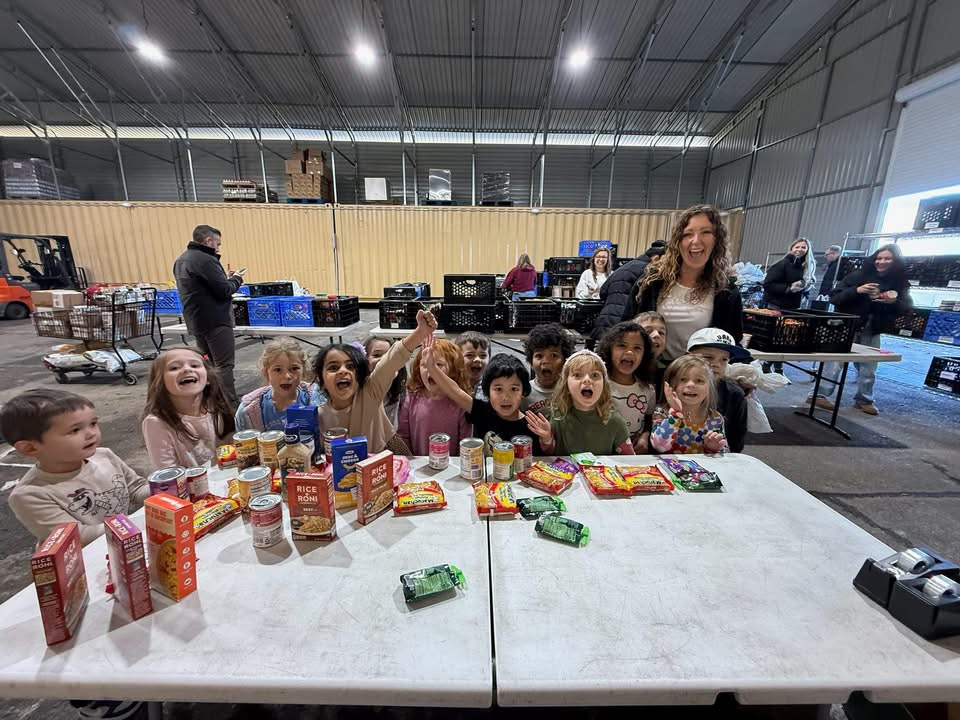
    As we approached the season of gratitude, our families came together in an extraordinary way to support the Hope Creek Food Bank. While we didn’t set a specific weight goal or a “count” to reach, the sheer volume of generosity was overwhelming. Across 22 classrooms, more than 275 KATC students and their families contributed to a donation that required several cartloads to the Mill Creek Food Bank (The Hope Creek Charitable Foundation).

    At KATC, we believe in teaching empathy through action. For several of our students, this wasn’t just a collection bin in the lobby; it was a hands-on experience. A few of our classes took “mini field trips” to deliver the food directly to the food bank. Seeing our students carry in donations—literally putting their small hands to work to help others—is a memory we will cherish.

    The impact of these donations cannot be overstated. The Mill Creek Food Bank serves 600 families—representing over 2,000 individuals—every week. In a community as vibrant as ours, it can be easy to overlook the hunger that exists right next door.

    The team at the food bank shared their gratitude with our school: “Thank you to Kids at the Creek for donating food to Hope Creek and helping hungry kids. Your kindness brings real hope to the children and families who depend on us. We’re so grateful for your support!”

    Our relationship with the food bank extends beyond the November food drive; it is a growing partnership. We are incredibly grateful for our ongoing partnership, which includes the KATC garden beds donated to the preschool by Hope Creek. These spaces allow us to teach our students about sustainability and the joy of growing food from the ground up.

    By connecting our students to the source of their food and the importance of sharing it, we are planting seeds of compassion that we hope will grow for a lifetime.

    To the parents, grandparents, and students who filled those boxes: Thank you. You didn’t just provide meals; you showed our children what it looks like to be a “neighbor.” We look forward to many more years of partnering with Hope Creek to keep Mill Creek fed and hopeful.

    Learn more about The Mill Creek Food Bank and the Hope Creek Charitable Foundation here!

    Frequently Asked Questions: Teaching Compassion at KATC

    1. How does Kids at the Creek teach preschoolers about empathy and kindness? At KATC, we believe in teaching empathy through direct action. During our annual November food drive, more than 275 students and their families participate in supporting the Hope Creek Food Bank. By physically bringing in donations, our students learn that their “small hands” can make a significant difference in the lives of others.

    2. What is the relationship between Kids at the Creek and the Mill Creek Food Bank? KATC maintains a deep, ongoing partnership with the Hope Creek Charitable Foundation (The Mill Creek Food Bank). This relationship goes beyond food drives; it includes garden beds donated by Hope Creek to our preschool. These gardens allow us to teach students about sustainability, the life cycle of food, and the joy of sharing what we grow with our neighbors.

    3. Why are “mini field trips” to the food bank important for young learners? Several of our 22 classrooms participate in mini field trips to deliver donations directly to the food bank. This hands-on experience transforms a “collection bin” into a real-world lesson. Seeing where the food goes helps preschoolers understand the concept of a “neighbor” and connects them to the 600 families served by Hope Creek every week.

    4. How many families benefit from the donations collected at KATC? The impact is substantial. The Mill Creek Food Bank supports over 2,000 individuals weekly. By contributing several cartloads of food, KATC families help provide essential nutrition to the children and families in our immediate community who depend on Hope Creek for support.

    5. What role does gardening play in the KATC curriculum? Thanks to a partnership with Hope Creek, our students utilize on-site garden beds to learn about “growing food from the ground up.” This teaching tool connects students to the source of their food and reinforces the values of compassion and sharing, planting seeds of responsibility that we hope will last a lifetime.

    6. How can parents get involved in KATC’s community service projects? We invite parents, grandparents, and students to participate in our seasonal drives and community-building events. Whether it is filling a donation box in November or helping tend to the preschool garden, there are many ways for KATC families to show our children what it looks like to be an active, caring member of the Mill Creek community.